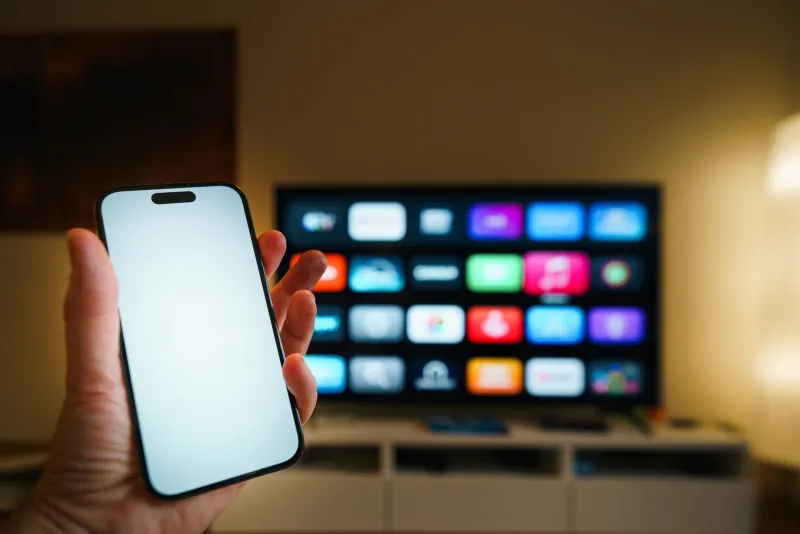
Cutting the Stream: How Americans Are Walking Away from Subscription TV — and Actually Enjoying It
Photo: Ashtabula Archive, Public domain, via Wikimedia Commons
Somewhere between the fifth password reset and the third price hike in two years, a lot of Americans just... stopped. Not stopped watching TV, exactly. Stopped paying for the privilege of being confused about where their shows went.
The numbers back this up. Streaming churn rates — the industry term for subscribers canceling — hit record highs in early 2025. According to data from Antenna, a subscription analytics firm, the top eight streaming platforms collectively saw over 25 million cancellations in the first quarter of 2025 alone. That's not a blip. That's a wave. And it's been building for a while.
At 382361, we track a lot of what's happening in the entertainment space — the trends, the surprises, the stuff the big outlets are slow to notice. And this one has been quietly reshaping how everyday Americans spend their evenings.
The Breaking Point Nobody Predicted
For years, the conventional wisdom was that streaming fatigue was overblown. Sure, people complained about too many services, but they kept subscribing. The logic was simple: convenience wins. Why drive to a video store (RIP) when you can tap a button?
But something shifted around late 2024. The price increases got harder to ignore. Netflix, Disney+, Max, Peacock — almost every major platform raised rates within an 18-month window. Some added ad tiers, then raised those too. Others cracked down on password sharing in ways that felt less like policy enforcement and more like a dare.
Kara M., a 34-year-old teacher from Columbus, Ohio, canceled four services between October 2024 and February 2025. "I sat down one Sunday and added up what I was spending," she says. "It was over $90 a month. And I couldn't even tell you what I'd watched in the last month that I actually loved."
That sentiment — paying a lot for something you're not sure you value — turns out to be pretty common. A 2025 survey by J.D. Power found that 61% of streaming subscribers felt they were subscribed to more services than they actually needed. That gap between "subscribed to" and "actively using" is exactly where cancellations are born.
What People Are Watching Instead
Here's the part that surprises most people: the folks who've gone streaming-light (or streaming-free entirely) aren't just staring at blank walls. They've found alternatives — and some of them are genuinely good.
Library Apps The Libby app, run through OverDrive and connected to public library systems across the country, has seen explosive growth. It's primarily known for ebooks and audiobooks, but its video content — through partnerships with Kanopy and Hoopla — has quietly become a legitimate streaming alternative. Kanopy alone offers thousands of films, including arthouse titles, documentaries, and classic cinema, completely free with a library card. Marcus T., a 41-year-old from Portland, describes it as "the streaming service I didn't know I'd been paying taxes for my whole life."
Free Ad-Supported TV (FAST) Channels Pluto TV, Tubi, and Peacock's free tier have all reported significant audience growth heading into 2025. These platforms are ad-supported, which means you're trading 90 seconds of commercials every 20 minutes for zero monthly fees. For a lot of viewers, that trade is starting to feel reasonable again — almost nostalgic, in a way.
Community and Neighborhood Screenings This one's harder to quantify but fascinating to observe. Local Facebook groups, neighborhood apps like Nextdoor, and community centers across the US have seen a resurgence in communal viewing events. Outdoor movie nights, church hall screenings, even informal "watch parties" hosted in someone's backyard. It's social, it's cheap, and according to participants, it's weirdly fun in a way that watching alone on a laptop just isn't.
Physical Media (Yes, Really) Disc sales were supposed to be dead. Someone forgot to tell the people buying them. Used Blu-ray sales at thrift stores and through platforms like Decluttr reportedly jumped noticeably in late 2024. Some viewers are rebuilding personal libraries — curated collections of films they actually want to own, rather than renting access to an algorithm's best guess about their taste.
Has the Industry Finally Peaked?
That's the real question, and the honest answer is: probably not peaked in terms of total revenue, but definitely peaked in terms of cultural dominance.
The streaming era promised to replace traditional TV entirely. It delivered a lot — genuinely great original content, on-demand convenience, global reach. But it also created a fragmented, expensive, password-protected maze that a growing number of Americans are deciding isn't worth navigating.
Industry analysts are watching the churn data carefully. When subscribers cancel a service and come back within a few months — what the industry calls "churning and returning" — that's manageable. But when they cancel and stay gone, or cancel and replace the service with something free, that's a structural problem.
Meanwhile, the content itself has become part of the issue. The sheer volume of original programming — hundreds of new series and films released across platforms every year — has paradoxically made it harder to find something worth watching. When everything is available, nothing feels special. The cultural moment of "everyone's talking about this show" has become rarer, because everyone's watching something different on a different platform.
What This Means Going Forward
Nobody's predicting the death of streaming. That would be dramatic and almost certainly wrong. But the era of frictionless growth — where platforms could raise prices, reduce quality, and still count on subscriber loyalty — does appear to be ending.
The viewers who've walked away aren't gone from entertainment. They're just watching differently. They're being pickier, more intentional, and frankly more creative about where they find content. And that might actually be good for them.
For the platforms, the message is uncomfortable but clear: the audience's patience has limits. You can only raise prices so many times before people start doing the math. And in 2025, a lot of people did the math.
As for Kara from Columbus — she kept one service. Just one. "I pick the one I'm actually using each month and cancel the rest," she says. "It's a little annoying, but I'm saving like $70 a month and I watch less garbage. Honestly? Win-win."
That might be the most honest summary of where American streaming culture stands right now: leaner, more deliberate, and maybe a little bit better for it.