Bored on Purpose: The Quiet Rebellion Against Always-On Entertainment

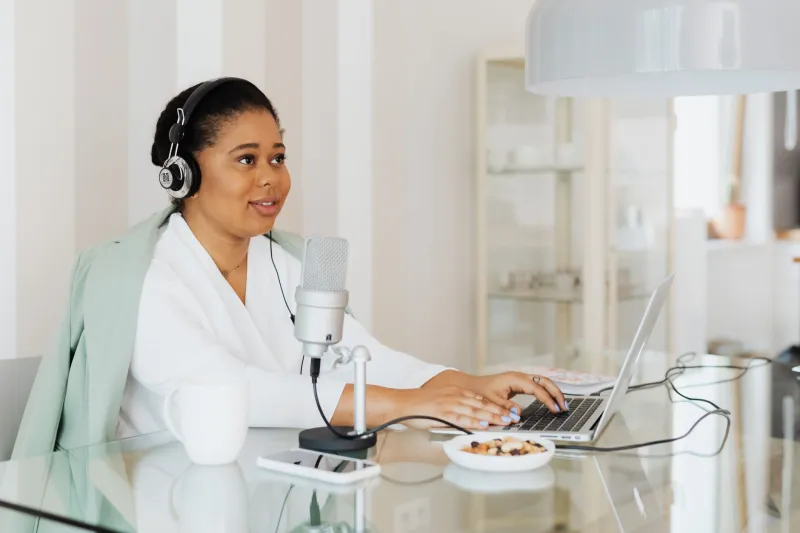
Photo by Photo by Brooke Balentine on Unsplash on Unsplash
Somewhere between your seventh streaming app and your third podcast of the morning, something broke. Not your Wi-Fi — your willingness to keep up. A surprisingly large chunk of Americans have quietly started doing something radical: absolutely nothing. No queue. No playlist. No "up next." Just... existing. And they're calling it intentional boredom, and somehow, they're making it sound cool.
This isn't burnout in the traditional sense. It's more deliberate than that. People aren't collapsing from exhaustion — they're opting out before the crash. They're looking at the 47 things they could watch tonight and choosing none of them. They're silencing the notification that tells them a creator they follow just dropped new content. They're letting the boredom roll in like a tide, and then — weirdly — they're staying in it.
The FOMO Economy Is Running Out of Steam
For the better part of a decade, entertainment culture in the US has been powered by the fear of missing out. Studios, streamers, and social platforms all built their entire business models around it. The message was simple: if you weren't watching, listening, scrolling, or engaging, you were falling behind. There was always something new, always a conversation happening without you, always a reason to stay plugged in.
But FOMO has a ceiling. And a lot of people are hitting it.
Talk to anyone who's gone through the intentional boredom phase — and more people have than you'd think — and you'll hear a version of the same story. At some point, the content stopped feeling like entertainment and started feeling like homework. The watch list became a to-do list. The algorithm knew what you liked better than you did, and somehow that felt worse than not knowing.
Marcus, a 34-year-old graphic designer from Columbus, Ohio, describes the moment he stepped back. "I had a Sunday with nothing planned and I just... didn't turn anything on. I sat on my couch for like twenty minutes doing nothing. And I kept waiting to feel guilty about it. But I didn't. I felt fine. Better than fine."
He hasn't canceled all his subscriptions, but he's down to one streaming service and a rule about no screens before noon on weekends. "It sounds extreme but it's really not. It's just having a preference again."
What 'Doing Nothing' Actually Looks Like
Here's the thing about intentional boredom — it doesn't mean staring at a wall (though some people report doing exactly that, and enjoying it). What it actually looks like varies pretty widely:
- Taking walks without headphones. This one comes up constantly. People who used to fill every outdoor minute with podcasts or music are rediscovering what it sounds like outside. Birds. Traffic. Neighbors. Their own thoughts.
- Picking up analog hobbies. Puzzles, drawing, cooking without a recipe video playing, reading physical books. The common thread is activities that don't feed data back to a platform.
- Sitting in a room without a screen on. This sounds almost embarrassingly simple, but try it. A lot of people can't make it ten minutes.
- Letting the weekend be unscheduled. No events, no content plan, no "we should watch that thing everyone's talking about." Just seeing what happens.
Jessica, a 29-year-old teacher from Austin, started her boredom experiment after noticing she was exhausted every Sunday night despite doing nothing physically demanding. "I was consuming all weekend. Streaming, scrolling, group chats, YouTube rabbit holes. My brain never got a break. I thought I was relaxing, but I wasn't. I was just switching inputs."
She now calls Sunday afternoons her "dead zone" — no phone, no TV, no plans. "I started noticing things again. Like, random ideas would just show up. Stuff I wanted to make or do. It was like the noise had been drowning all of that out."
The Status Flip Nobody Saw Coming
Here's where it gets culturally interesting. In previous years, being plugged in was the flex. Knowing every show, having opinions on every drop, being current — that was social currency. Being out of the loop was something to apologize for.
That's shifting. Slowly, but noticeably.
Saying "I don't really watch much TV" used to sound like a brag that nobody believed. Now it's starting to carry a different weight — something closer to genuine credibility. People who've deliberately reduced their consumption are talking about it the way wellness converts talk about their routines. Not preachy, exactly, but quietly confident.
There's a version of this that's annoying — the person who won't stop telling you how little they consume, which is its own form of performance. But underneath the posturing, something real is happening. The idea that your time and attention are finite resources worth protecting has gone from self-help book concept to actual lived practice for a meaningful number of people.
What the Silence Actually Teaches You
People who've spent real time in intentional boredom tend to report a few consistent discoveries.
First, most of what they were consuming wasn't actually enjoyable — it was just filling space. The shows they watched out of habit, the podcasts that played while they drove, the social feeds they checked reflexively — a lot of that was noise dressed up as content.
Second, boredom isn't actually that uncomfortable once you stop fighting it. The first few minutes can feel almost physically itchy. But that passes. What's underneath it, most people say, is something quieter and more useful — the ability to think without prompts, to want things without being sold them, to be genuinely curious again.
Third — and this is the one that surprises people — when they do go back to entertainment, they enjoy it more. Watching one movie you actually chose feels different from grinding through a queue. Listening to an album start to finish, because you wanted to, hits differently than having one served to you.
So What Does This Mean for the Entertainment Machine?
Probably not much, in the short term. The platforms are enormous, the content pipelines are full, and the algorithms are only getting better at capturing attention. The intentional boredom crowd is a real thing, but they're not toppling Netflix.
What they might be doing, though, is quietly modeling something that more people are ready to try. The idea that you're allowed to be bored. That you don't owe the content economy your every spare moment. That choosing nothing is still a choice — and sometimes the best one available.
For a culture that built its entertainment identity around always having something to watch, always being in the conversation, always being on — that's a genuinely weird and kind of refreshing place to land.
Turns out the most countercultural thing you can do in 2025 might just be sitting on your porch and watching the afternoon go by. No soundtrack required.