Subscriptions You Forgot You Had Are Quietly Draining Your Bank Account Every Month
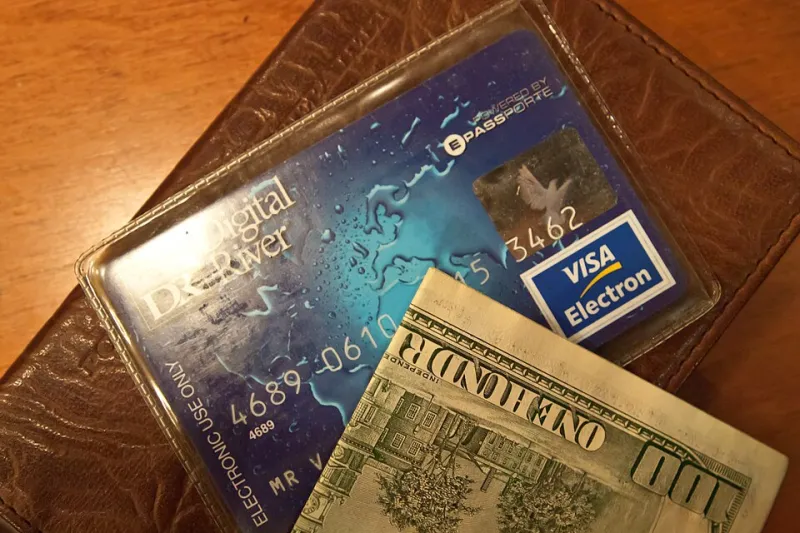
Photo: Vyacheslav Argenberg, CC BY 4.0, via Wikimedia Commons
Somewhere between your third streaming service and that meditation app you downloaded during a rough Tuesday in 2022, something went wrong. You stopped watching, stopped logging in, stopped caring — but the charges kept coming. Every month, like clockwork, a handful of small dollar amounts leave your account for platforms you couldn't pick out of a lineup.
You're not alone. Not even close.
The Numbers Are Actually Kind of Alarming
West Monroe, a digital consulting firm, has been tracking American subscription habits for years, and their findings are consistently humbling. The average U.S. household underestimates its monthly subscription spend by roughly 2.5 times. People guess they're paying around $80 a month. The reality tends to land north of $200 — and that's before you factor in the annual plans that only show up once a year and catch you completely off guard.
Churn through the math: at $200 a month, that's $2,400 annually. Subtract what you actually use regularly, and a meaningful chunk of that total is going toward services that haven't seen your login credentials since the Biden administration's first year.
Financial wellness platform Rocket Money (formerly Truebill) reported that when users run their first subscription audit, they find an average of two to four services they had genuinely forgotten about. Two to four. Per person. Multiply that across a country of 330 million people and you start to understand why subscription businesses are some of the most quietly profitable ventures in the entertainment economy.
Why You Keep Paying for Things You Don't Use
This isn't really a memory problem. It's a design problem — one that's been engineered very deliberately.
Subscription platforms spend enormous resources on what the industry calls "friction architecture." The idea is simple: make signing up effortless and make canceling feel like a bureaucratic ordeal. You can join a streaming service in about 45 seconds with a few taps. Canceling that same service might require navigating three separate menus, declining two retention offers, confirming your decision on a guilt-laden screen that shows you everything you'll lose, and sometimes even calling a phone number.
Fitness apps are notorious for this. So are music platforms, audiobook services, and cloud storage providers. The harder the exit, the longer the average subscriber stays — even if they stopped engaging entirely.
There's also a psychological layer that has nothing to do with friction. Behavioral economists call it "optimism bias." You keep the subscription because some version of you genuinely intends to use it. The language-learning app, the premium podcast network, the niche documentary streamer — you're not paying for what you use. You're paying for who you plan to become. That future self who watches foreign films and finally learns Spanish is worth $12.99 a month, apparently.
And then there's the sunk cost trap. You've already paid six months into an annual plan. Canceling now feels wasteful, even though continuing to pay for the remaining months is objectively more wasteful. The brain doesn't always do the math correctly on this one.
The Platforms Know Exactly What They're Doing
This isn't cynicism — it's documented business strategy. Subscriber retention metrics are tracked obsessively by every major platform. "Passive subscribers" (industry speak for people who pay but don't engage) are actually valuable to these companies in a specific way: they generate revenue without consuming bandwidth, server resources, or content licensing costs.
A subscriber who logs in daily costs more to serve than one who pays monthly and never shows up. The zombie subscriber is, from a pure infrastructure standpoint, the ideal customer.
Some platforms have started sending "are you still watching?" style check-in emails — not entirely out of goodwill, but because re-engaging a dormant subscriber is cheaper than acquiring a new one. If they can get you to open the app once, the clock resets on your psychological attachment to the service.
A Practical Guide to Actually Cleaning House
Okay, enough doom. Here's how to actually fix this.
Step one: Pull your bank and credit card statements. Go back three months on every account you use for purchases. Don't rely on your memory — that's how you got here. Look for recurring charges, especially anything between $4.99 and $19.99 that shows up on the same date each month. Write them all down.
Step two: Use an app to do the heavy lifting. Services like Rocket Money, YNAB, or even the subscription tracker built into some banking apps can automatically flag recurring charges and categorize them. Rocket Money will even cancel subscriptions on your behalf for a fee — which, yes, is a little ironic, but sometimes the convenience is worth it.
Step three: Sort into three buckets. Active and worth it. Active but questionable. Haven't used it in more than 60 days. That last bucket gets canceled today, not "this weekend" or "when I have time." Today.
Step four: Audit the annual plans separately. Search your email inbox for terms like "annual renewal," "subscription confirmed," and "receipt." Annual subscriptions are sneaky because they fall off your monthly radar entirely. You might have three or four of these sitting out there.
Step five: Set a calendar reminder. Three days before any free trial ends, you should get a reminder to decide whether you're actually keeping it. Most people forget to cancel trials not because they want to keep the service but because life happens and the deadline passes. A two-minute calendar entry prevents months of unnecessary charges.
The Bigger Picture
There's something a little telling about the subscription economy's relationship with entertainment specifically. Music, movies, TV, games, books, fitness content — these are all things we buy in the hopes that they'll enrich our lives in some way. The irony is that the financial drain of forgotten subscriptions can create real stress, which is the opposite of what entertainment is supposed to do.
At 382361, we've said it before in a few different ways: the sheer volume of options available to us right now is genuinely unprecedented, and managing all of it has become its own part-time job. The subscription audit isn't just about saving money. It's about taking an honest inventory of what you're actually getting value from and making intentional choices instead of letting inertia make them for you.
Canceling four services you don't use and reallocating that $50 a month toward one or two things you genuinely love? That's actually a better entertainment life, not a worse one.
The password cemetery will always be there. The question is whether you're going to keep paying the upkeep on it.