Bedroom Beats to Billboard: The New Wave of Artists Who Skipped the Old Rules in 2025
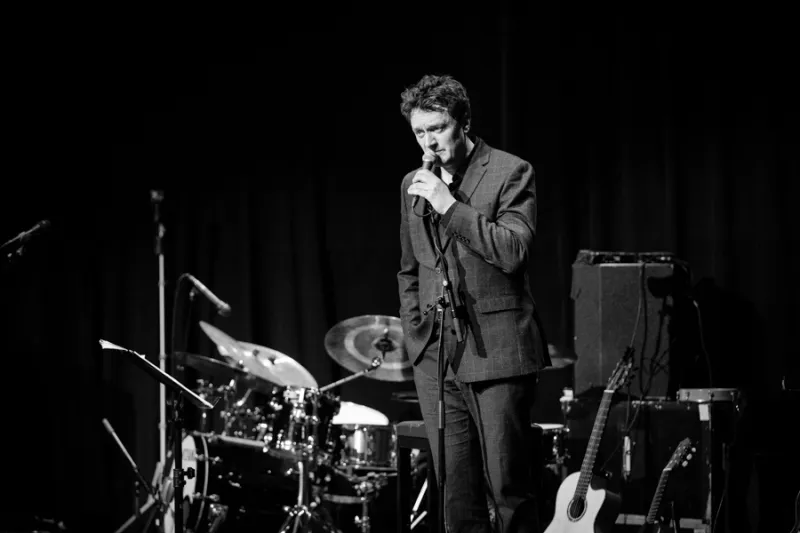
Photo: Tore Sætre, CC BY-SA 4.0, via Wikimedia Commons
Not long ago, making it in the music industry meant impressing the right A&R rep at the right label at the right moment — a process that was roughly as reliable as winning the lottery and about as democratically distributed. In 2025, that pipeline still exists. It's just not the only one anymore, and for a growing number of artists, it's not even the preferred one.
The class of breakthrough musicians this year looks genuinely different from what came before. They're younger, more genre-fluid, often self-producing, and many of them had millions of streams before a single label executive sent them an email. Here's a look at who they are, what they're doing, and what their rise tells us about where music is actually heading.
The New Launchpad: Why TikTok Still Works (Differently)
Everyone knows TikTok is a music discovery machine. What's less understood is how it works in 2025 compared to even two years ago. The era of a single fifteen-second clip going viral and turning an unknown into an overnight star hasn't disappeared, but it's gotten more nuanced.
The artists who are genuinely sustaining careers from social media virality aren't just one-clip wonders anymore. They're building what music industry analysts are calling micro-communities — tight, engaged fandoms that form around a specific aesthetic, emotional niche, or subcultural identity before the mainstream even notices.
Think of it less like a lottery ticket and more like compound interest. A bedroom pop artist posts consistently for eight months to 40,000 followers who are deeply invested, and then one video crosses over. By that point, the infrastructure — the Spotify playlist placements, the merch store, the Discord server — is already built.
Spotify's internal data from early 2025 showed that several breakout artists in the singer-songwriter and hyperpop categories had accumulated over 50 million streams before appearing on any major curated editorial playlist. The listeners found them first. The algorithms caught up later.
Five Artists Who Are Rewriting the Script
1. Mara Voss — A 23-year-old from Columbus, Ohio, Voss spent two years posting stripped-back acoustic covers and original songs to TikTok before her track "Saltwater Highway" caught fire in late 2024. The song, which she recorded in her apartment on a $300 interface, spent eleven weeks on Spotify's US Viral 50 chart. Her debut EP dropped in February 2025 entirely independently, and she has yet to sign with a major. She's also already sold out two national tours.
2. Dren — The production project of 19-year-old Darius Renault from Atlanta, Dren is what happens when a kid raised on SoundCloud, Hyperpop, and classic R&B decides to make something that sounds like all three at once. His Bandcamp-first release strategy — dropping music there before anywhere else, letting superfans buy early — has become something of a case study in fan monetization outside the traditional streaming model.
3. Lucia & The Foxes — Technically a duo from Austin, Lucia Mendez and her collaborator (who goes only by "Fox") built their audience almost entirely through niche country-adjacent TikTok communities before landing a Grammy nomination for Best New Artist in 2025. The nomination itself felt like a minor shock to industry observers who hadn't been watching those corners of the internet.
4. SOLSTICE — An anonymous producer whose identity remains genuinely unknown, SOLSTICE makes instrumental electronic music that has racked up hundreds of millions of streams across platforms. No interviews, no face reveals, no label. Just the music and a very active Reddit community trying to figure out who they are. The mystique is almost certainly intentional, and it's working.
5. Theo Kang — A Korean-American artist from Los Angeles whose bilingual indie-pop has found audiences in both the US and South Korea without being positioned as a "crossover" act in the traditional sense. Kang's approach — making music for himself and letting audiences self-select — is a rejection of the old targeting model entirely.
What the Data Actually Says
The numbers behind this shift are striking. According to MRC Data and Luminate's 2025 mid-year report, more than 60% of new artists who cracked 100 million lifetime streams in the first half of 2025 had built their initial fanbase through short-form video platforms before any label involvement.
Perhaps more significantly, the conversion rate from casual listener to paying fan — merch purchases, concert tickets, direct-to-fan platform subscriptions — is measurably higher for artists who built grassroots audiences compared to those who were developed and launched by labels. The fans feel ownership. They were there first.
This is not great news for the traditional A&R model, which is built on the premise that labels add value by identifying and developing talent. When the talent identifies and develops itself, the value proposition gets murkier.
The Gatekeeping Isn't Gone — It's Just Moved
Here's the part that complicates the triumphant narrative: the old gatekeepers haven't disappeared. They've been partially replaced by algorithmic ones.
Getting on the right TikTok "For You" page, landing on a Spotify editorial playlist, being featured in an Apple Music "New Music Daily" — these are the new bottlenecks. And while they're more meritocratic than the old system in some ways (the algorithm doesn't care who your manager knows), they come with their own distortions.
Music that is optimized for algorithmic discovery tends to have specific sonic characteristics: immediate hooks in the first five seconds, emotional peaks early in the track, a runtime under three minutes. Some artists are making genuinely great music within those constraints. Others are essentially writing songs for robots.
The artists on this list — and the ones worth watching going forward — are the ones who figured out how to play the game without being consumed by it.
Who to Watch for 2025–2026
Beyond the names above, a few acts are currently in that pre-explosion phase that's worth paying attention to:
- Nora Bel, a jazz-influenced singer from New Orleans whose Instagram reels have developed a cult following among people who describe themselves as "not really a jazz person"
- The Gradient, a four-piece math-rock band from Chicago that has somehow accumulated a massive following on YouTube despite being almost entirely ignored by streaming playlists
- Pale Figures, an ambient electronic project that releases music exclusively on full moon dates, which is either a gimmick or a genius community-building strategy (probably both)
What This All Means
The music industry spent decades operating on scarcity — limited radio slots, limited shelf space at record stores, limited bandwidth for who got to be an artist. The internet didn't just expand that bandwidth. It essentially made it infinite.
What 2025 is showing us is that the artists who thrive in that environment aren't necessarily the ones with the most talent or the best connections. They're the ones who understand community, who can sustain creative output over time, and who know how to be interesting to a small group of people before worrying about being interesting to everyone.
That's a genuinely different skill set than what used to get you signed. And it's producing some genuinely interesting music.
Go find it before the algorithm does.